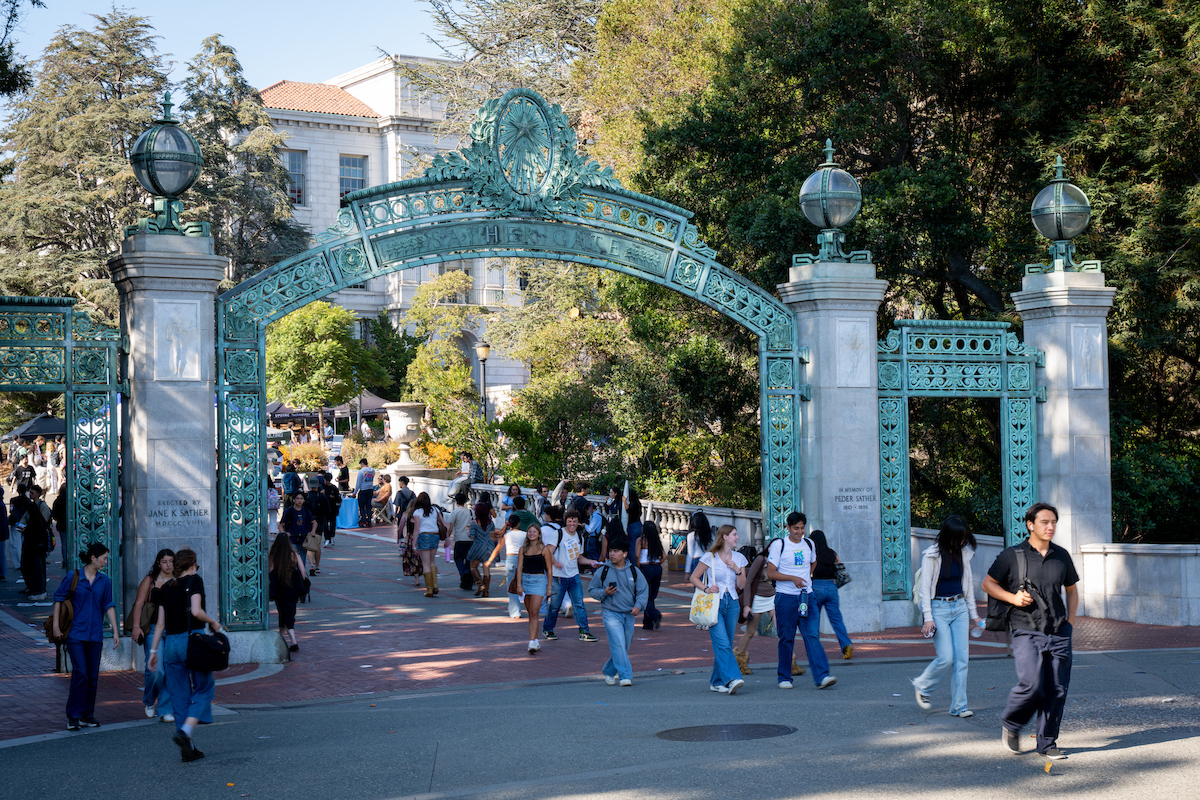
Photo by Keegan Houser.
Nicholas Foster attended eight different schools on three continents growing up. “Each place forced me to adapt quickly, and not just to new languages, but to completely different ways of thinking and learning,” he said. He applied to UC Berkeley because it embodies everything he had come to value as a result: “an intellectually vibrant, globally diverse public university that reflects the kind of environment I’ve spent my life learning in.”
Yet Foster faced some challenges when he was entering Berkeley that made him question whether he could stay. Thankfully, he said, he received a new scholarship that has been a “lifeline” — allowing him to continue his education without the “persistent anxiety of figuring out how to afford tuition, meals, or housing.”
Loosening the squeeze
Many families often earn too much money to qualify for significant need-based aid, but not enough to pay for tuition and other college expenses without dipping into their savings, borrowing money, or relying on other resources. It’s the middle-class squeeze — a disconcerting crisis unfolding in homes across the country. A new gift to UC Berkeley is aiming to bridge that gap.
As the cost of college continues to jump in the United States, the bulk of financial assistance is provided to students from low-income families. At Berkeley, undergraduate tuition has risen from $3,799 in 1995–96 to $17,478 in 2025–26, and 62 percent of all undergraduates receive some form of financial aid. We do not take this point of pride lightly. An American dream engine, Berkeley has been recognized as the leading university in moving students further up the economic ladder.
But many middle-class students get left out of financial aid efforts. As a result, they often take out loans to pay for higher education — graduating not just with a degree, but also with larger debt.
The new gift established the Bear Horizons Scholarships to reach middle-income undergraduates studying STEM, arts and humanities, or social sciences. Recipients must be residents of California, and the award amount will vary depending on other resources they are receiving. For the 2026–27 academic year, 73 students — Foster among them — were awarded the Bear Horizons Scholarships. They are modeled after the State of California’s Middle Class Scholarship, which started in 2013.
For the 2026–27 academic year, 73 students were awarded the Bear Horizons Scholarships.
“Federal and state funding for higher education have become unstable in recent years,” said Cruz Grimaldo, director of financial aid and scholarships, noting that the 2026-27 state budget cut funds from its Middle Class Scholarship. “Private scholarships like these support students who need it but whose family resources disqualify them from many programs. Bear Horizons will make an incredible difference in both Berkeley’s affordability and in improving access for a wider swath of students.”
The donor, who has asked to remain anonymous, understands from personal experience that it’s harder to follow the career path of your choice when your highest priority is generating an income as quickly as possible. This opportunity will enable its recipients to attend Berkeley and consider a wide path of academic pursuits and careers.
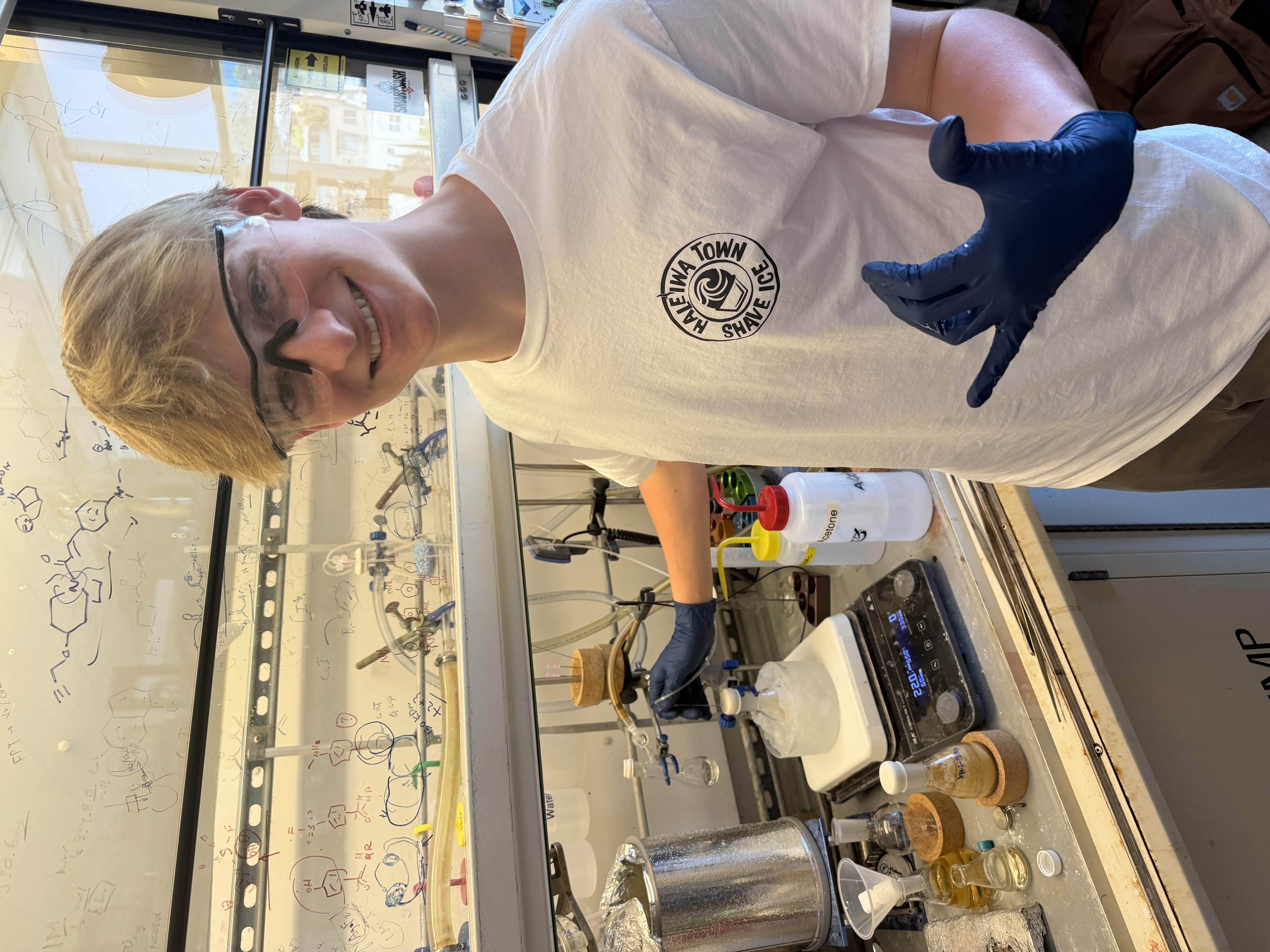
Foster said contributing to research now has made him want to continue doing it in whatever he does next in life. Photo courtesy of Nicholas Foster.
Foster, a third-year student in chemical biology, is now a research assistant in the Nomura Lab. He helps make bifunctional molecules and test them in cells, with the overall goal of using the cell’s own disposal system to destroy proteins that are involved in diseases such as cancer. Conducting research as an undergraduate has shown him how much he enjoys working on problems that could eventually change how we treat diseases.
Foster said the Bear Horizons Scholarship has made his lab experience, which is unpaid, possible. “It also gives me more freedom to think about my future based on what I find meaningful, instead of feeling that I have to choose whatever pays the most,” he said. He is considering medical school or a Ph.D.
“This support allows students like me to live out the university’s public mission by giving us the freedom to engage in meaningful work, which helps prepare us as the next generation of leaders to contribute to a better world.” — Nicholas Foster, recipient of a Bear Horizons Scholarship
To support more students like Foster, the donor intends to inspire others to contribute to or establish a middle-class scholarship.
One downside of the middle-class squeeze is that many families feel forced to choose between taking out loans or breaking their family’s bank, questioning whether the cost of higher education is worth it. To this donor, the answer is yes, and the newly established scholarships will help some families turn the squeeze into a sigh of relief.
If you are interested in supporting a middle-class scholarship, please email .


